

Plant And Equipment Insurance Online :: News
SHARE

Share this news item!

Electronic Livestock Tags Put Farm Records Under the Spotlight

Traceability reforms are a practical reminder to check stock values, claims evidence and biosecurity plans

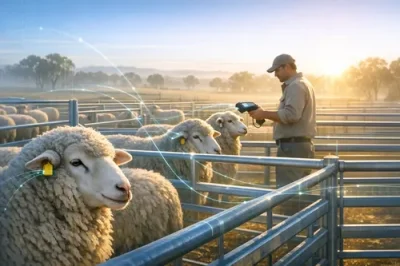
Electronic Livestock Tags Put Farm Records Under the Spotlight?w=400

The information on this website is general in nature and does not take into account your objectives, financial situation, or needs. Consider seeking personal advice from a licensed adviser before acting on any information.

Australia’s sheep and goat electronic identification rollout is moving from policy discussion into everyday farm management, and its insurance implications should not be overlooked.
Recent rural reporting has highlighted the practical work now facing producers, agents, processors and saleyards as the industry shifts towards stronger individual animal traceability.

For many farm businesses, eID is being treated as a compliance and biosecurity issue. That is understandable. Faster tracing can help authorities respond more effectively to disease threats, stock movements and market-access concerns. But for insurance planning, the same systems can also strengthen the quality of records behind livestock values, ownership, movements and losses.

That matters because livestock claims are often evidence-heavy. After theft, fire, flood, dog attack, transport loss or other insured events, a producer may need to show what stock was on hand, where it was located, how it was identified and what it was worth. Paper records, memory and broad paddock estimates can leave gaps, particularly where mobs are split across multiple blocks or agistment properties.

Electronic tagging will not remove the need for sound management records, nor will it automatically broaden policy wording. However, it may make it easier for producers to reconcile stock numbers, demonstrate movement history and support a claim file. The real benefit comes when eID data is kept consistently and matched with sale documents, breeding records, veterinary notes and on-farm inventories.

Producers should use the rollout as a prompt to review three areas:

  • Whether insured livestock values reflect current market prices, breeding quality and seasonal stocking decisions.
  • How quickly stock records could be produced after a loss, especially during a regional emergency.
  • Whether policy exclusions, disease conditions, transit limits and theft requirements are clearly understood.

There is also a cost-management angle. Tags, readers, software, training and data administration can become part of the operating environment for sheep and goat enterprises. Where technology is mounted in yards, sheds, vehicles or handling systems, it may need to be considered alongside machinery, plant or contents cover.

As with any change in farm operations, the insurance review should be practical rather than rushed. Producers can estimate the replacement value of key assets, then speak with an adviser or broker about how livestock, equipment, liability and business interruption exposures fit together. The eID transition is primarily about traceability, but it is also a timely reminder that accurate records are one of the strongest tools a farm business has when it needs cover to respond.

Published:Wednesday, 2nd Sep 2026
Author: Paige Estritori

Please Note: We do not endorse any specific products or companies. Some content is sourced from third parties, including press releases, and may not be independently verified for accuracy or completeness.

Share this news item:

Rate this article

0 Comments

No comments yet. Be the first to share your thoughts.

Insurance News

What Electric Heavy Vehicles Mean for Truck Insurance
10 Sep 2026: Paige Estritori
Recent transport and fleet industry coverage continues to point to a steady increase in electric and low-emission heavy vehicles across Australian logistics operations. For many operators, the attraction is clear: quieter vehicles, lower tailpipe emissions, potential fuel savings and stronger alignment with customer sustainability targets. But the insurance conversation is now becoming more detailed than simply replacing a diesel truck with an electric one. - read more
Why the Latest Insurance Data Matters for Trade Businesses
10 Sep 2026: Paige Estritori
APRA’s latest quarterly general insurance statistics point to a market that is still under cost pressure, even as insurers continue to report stronger overall results than during the worst of the recent claims cycle. For Australian tradespeople, the headline is not simply whether insurers are profitable. The practical issue is how rising premiums, repair costs, reinsurance expenses and claims activity flow through to the price and availability of cover used every day on the tools. - read more
Advice Changes Could Make Income Cover Easier to Understand
10 Sep 2026: Paige Estritori
Australia’s financial advice reform agenda has taken another important step, with industry attention turning to how simpler, more accessible guidance could help consumers make better decisions about insurance. For workers who rely on income insurance or salary continuance cover, the issue is more practical than political: many people hold cover they do not fully understand until illness or injury forces them to test it. - read more
Why Battery Freight Is Becoming a Truck Insurance Issue
10 Sep 2026: Paige Estritori
Recent transport and insurance industry attention on lithium-ion battery safety is a timely warning for Australian truck operators. The issue is no longer limited to consumer products catching fire in homes or warehouses. Batteries now move through freight networks in tools, scooters, e-bikes, electronics, spare parts and energy storage equipment, and that creates a different risk profile for carriers, depots and subcontracted linehaul work. - read more
Seasonal Bushfire Risk Puts Farm Cover Back in the Spotlight
09 Sep 2026: Paige Estritori
Australia’s latest seasonal bushfire outlook is a practical reminder that fire risk is not confined to the height of summer. For many farms, the exposure begins well before a catastrophic fire day is declared, as grass growth, drying winds, stored fodder, machinery movement and access limitations combine to create a more complex risk profile than a standard rural home policy can address. - read more


Equipment Insurance Articles

Insurance Considerations for Mobile Plant Used on Roads or Moved Between Sites
Mobile plant can face different insurance and regulatory issues when it is transported between worksites or operated on or near public roads. Businesses should understand how plant insurance, transit cover, registration, CTP and liability policies may interact. - read more
General Liability Insurance vs. Plant and Equipment Insurance: What You Need to Know
When it comes to running a business, insurance is one of those things that often gets overlooked. However, understanding the different types of insurance is crucial for protecting your business assets and ensuring your peace of mind. Among the many options available, plant and equipment insurance is vital for businesses that rely on machinery and various tools. - read more
Unlock Savings: How Bundling Your Plant and Equipment Insurance Can Reduce Premiums
Plant and equipment insurance is a specialized type of coverage designed to protect your crucial assets. This insurance typically covers machinery, tools, and various equipment used in the operations of your business. It ensures that, in the event of damage or theft, you won’t face major financial setbacks. - read more
The Factors That Affect Plant and Equipment Insurance Premiums in Australia
Plant and equipment insurance is a specific type of policy designed to protect the tools, machinery, and equipment that businesses rely on for their operations. This insurance safeguards against various risks, ensuring that your essential assets are not a financial burden during unforeseen circumstances. - read more
What does plant and equipment insurance cover?
Plant and equipment insurance is a specialized form of coverage designed to protect the tools and machinery that businesses rely on for their operations. This type of insurance typically covers various assets, including construction machinery, agricultural equipment, and industrial tools. By safeguarding these critical assets, you can ensure that your business continues to run smoothly even in the event of loss or damage. - read more

Knowledgebase
Insurance Deductible:
the amount that an insured is required to contribute toward an insurance claim as stipulated in an insurance policy. Otherwise known as the "policy excess".