The information on this website is general in nature and does not take into account your objectives, financial situation, or needs. Consider seeking personal advice from a licensed adviser before acting on any information.
Plant and equipment insurance claims generally involve securing the site, gathering evidence, notifying the insurer, assessing the loss and agreeing on repair, replacement or settlement options. The exact process depends on the policy wording, the insured event and the insurer's claims criteria.
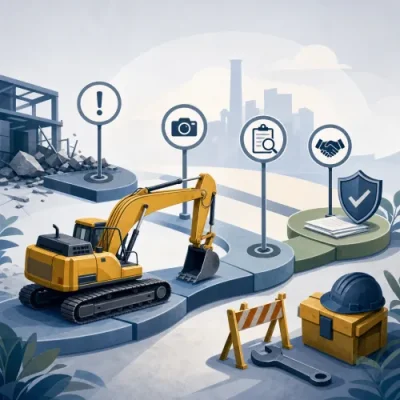
Plant and equipment insurance claims can feel urgent and complex, especially when a machine has been stolen, damaged on site or has broken down during a job. While each insurer and policy has its own requirements, most plant and equipment insurance claims follow a broadly similar path: protect people and property, record what happened, notify the insurer, support the assessment and work through repair, replacement or settlement options.
This guide explains the common plant insurance claim process for Australian business owners, contractors and equipment operators. It is general information only and should be read alongside your own policy wording, schedule and insurer instructions.
Start with safety and damage control
The first step after an incident is not paperwork. It is making sure people are safe and taking reasonable steps to prevent further loss, where it is safe and practical to do so.
Depending on the situation, this may include:
- isolating damaged machinery or switching off equipment;
- securing the worksite to prevent further damage or theft;
- arranging temporary protection from weather exposure;
- moving undamaged equipment away from a hazardous area, if safe;
- notifying site managers, project principals or hire companies where relevant;
- keeping damaged parts, locks, keys, tracking devices or other evidence.
Insurers commonly expect policyholders to take reasonable care after an incident. However, you should avoid putting workers or others at risk, and you should not authorise major repairs before the insurer has had an opportunity to assess the claim unless urgent action is necessary to prevent further loss.
Check what type of incident has occurred
The claims pathway can differ depending on whether the issue is theft, accidental damage, fire, rollover, storm damage, transit damage or mechanical breakdown. Your policy may respond differently to each type of event, and some causes may be excluded or require optional cover.
If you are still reviewing how your broader commercial plant and equipment insurance is structured, it is useful to understand the difference between cover for physical loss or damage, machinery breakdown extensions, hired-in plant obligations and liability-related exposures.
For theft claims
An equipment theft claim will usually require prompt reporting to police. Insurers may ask for a police event number, details of when the item was last seen, where it was stored, security measures in place and any available tracking, CCTV, GPS or witness information.
For theft of mobile plant, attachments or tools from a site, records showing site access controls, lock-up procedures, key management and serial numbers can help the insurer assess the circumstances.
For damage claims
A construction equipment insurance claim for accidental damage may involve photographs, operator statements, site reports, repair quotes and an assessment of whether the damage resulted from an insured event. For example, damage caused by collision or rollover may be treated differently from gradual deterioration, wear and tear or poor maintenance.
For breakdown claims
A machinery insurance claim involving breakdown will depend heavily on the wording of the policy. Some policies focus on external accidental damage, while machinery breakdown cover may be a separate section or optional extension. Insurers may ask for service history, maintenance records, diagnostic reports and evidence of the cause of failure.
Notify your insurer or broker as soon as practical
Once the immediate situation is under control, contact your insurer, broker or authorised claims contact. Your policy may set out notification requirements, including timeframes and information you need to provide.
When notifying a claim, be prepared to provide:
- your policy number or business details;
- the date, time and location of the incident;
- a plain description of what happened;
- the make, model, serial number and identification details of the equipment;
- photographs or videos of the damage, if available;
- police report details for theft, attempted theft or malicious damage;
- details of any third parties involved;
- urgent repair, recovery, towing or site safety actions already taken.
If you are unsure how a condition, exclusion or endorsement applies, a broker or insurance adviser may be able to help you understand the policy wording and the claims steps. They cannot guarantee an outcome, but they may help you prepare the information the insurer is likely to request.
Gather evidence before items are repaired, moved or discarded
Evidence is often central to a plant and equipment insurance claim. The insurer needs to understand what was insured, what happened, the likely cause, the extent of loss and whether the event falls within the policy terms.
Useful claim documents may include:
- purchase invoices, finance documents or proof of ownership;
- hire agreements or dry hire contracts for hired-in plant;
- equipment schedules showing insured values and listed items;
- maintenance and service records;
- operator logs, pre-start checklists and inspection records;
- photos of the machine before and after the incident;
- repair assessments, diagnostics and quotes;
- police reports for theft or malicious damage;
- site incident reports and witness statements;
- transport documents if damage occurred in transit.
If you want to prepare your records before an incident occurs, the article on paperwork needed for plant and equipment insurance explains documents that can also be useful during claims.
How the insurer assesses a plant insurance claim
After notification, the insurer will usually open a claim file and review the information provided. The assessment process may involve internal claims staff, repairers, engineers, assessors or loss adjusters, depending on the size and complexity of the loss.
The insurer may consider:
- whether the equipment was listed or otherwise covered by the policy;
- whether the incident occurred during covered use, storage, hire or transit;
- whether any exclusions or conditions apply;
- the cause of damage or breakdown;
- the insured value, market value or replacement basis stated in the policy;
- the applicable excess;
- whether repairs are economical;
- whether salvage has value;
- whether additional costs such as recovery, towing, expediting or hire equipment are covered.
For larger claims, a loss adjuster may inspect the site, interview relevant people, review documents and report to the insurer. This does not automatically mean the claim will be declined; it usually means the insurer needs more detailed information before making a decision.
Repair, replacement or cash settlement
If the claim is accepted, the settlement method depends on the policy terms, the condition of the equipment and the nature of the damage. Common outcomes may include repair, replacement, payment based on assessed value or another settlement method allowed by the policy.
| Possible outcome | How it may work | What to check |
|---|
| Repair | The insurer may approve repairs through an agreed repairer or based on accepted quotes. | Check whether all damage has been assessed and whether freight, diagnostics or specialist labour are covered. |
| Replacement | For a total loss, the insurer may consider replacement if the policy provides that option. | Check whether the basis is new replacement, market value, agreed value or another measure. |
| Cash settlement | The insurer may offer a payment based on the policy terms and assessed loss. | Check how the amount was calculated, including excess, depreciation, salvage and limits. |
| Decline or partial decline | The insurer may decline all or part of a claim if it falls outside the policy. | Ask for the reasons in writing and review the relevant policy clauses. |
Settlement outcomes are not guaranteed. They depend on the circumstances of the incident, the evidence available, the policy wording, exclusions, limits, excesses and the insurer's claims assessment.
How excesses and insured values affect the claim
Most plant and equipment insurance policies include an excess. This is the amount you contribute towards a claim, or the amount deducted from a settlement, depending on how the policy is structured. Different excesses may apply to theft, breakdown, hired-in plant, high-risk equipment or particular operating conditions.
Insured values can also matter. If equipment is underinsured, incorrectly described or not listed when required, it may affect the claim. For financed, specialised or imported machinery, valuation and replacement cost can be more complex, so keeping your equipment schedule updated is important.
What if the equipment is hired, leased or financed?
Claims can become more involved when the equipment is not simply owned outright by your business.
- Hired-in plant: The hire agreement may make you responsible for loss, damage, continuing hire charges or recovery costs. Your insurance needs to align with those contractual obligations.
- Financed equipment: The financier may have an interest noted on the policy and may need to be involved in settlement discussions.
- Leased or rented equipment: The owner's requirements, damage waiver terms and your own policy may all need to be reviewed.
If a project contract or hire agreement requires specific insurance, keep those documents available. They may influence who must be notified and how settlement is handled.
Common reasons plant and equipment claims are delayed
Some delays are unavoidable, particularly where a machine is highly specialised, parts are difficult to source or the cause of damage is disputed. However, many delays occur because the insurer does not yet have enough information to make a decision.
Common causes of delay include:
- missing serial numbers, invoices or proof of ownership;
- unclear details about where and how the incident occurred;
- late police reporting for theft;
- repairs starting before the insurer can inspect the damage;
- uncertainty about whether the equipment was hired, owned or financed;
- maintenance records not being available for breakdown claims;
- disputes between repair quotes and assessor findings;
- policy schedules that do not match the equipment being claimed.
Good record-keeping before a claim can reduce friction. It does not guarantee a faster or successful outcome, but it can help the insurer assess the claim more efficiently.
Questions to ask during the claim
When you lodge a plant and equipment insurance claim, it can help to ask practical questions early so you understand the next steps.
- What information is still needed to assess the claim?
- Can urgent repairs or temporary safety work proceed?
- Will an assessor, engineer or loss adjuster inspect the equipment?
- Is replacement hire equipment covered, and if so, under what conditions?
- Which excess applies?
- How will the insured value or settlement amount be calculated?
- Are there any policy limits, exclusions or endorsements that may affect the claim?
- How should salvage, damaged parts or recovered stolen equipment be handled?
- What is the process if the claim decision is disputed?
If you disagree with the claim decision
If a claim is declined, partially accepted or settled for an amount you do not understand, ask the insurer to explain the decision in writing and identify the policy clauses relied on. You can also provide further evidence if something has been misunderstood or if additional documentation becomes available.
Australian insurers generally have internal dispute resolution processes. If a dispute cannot be resolved internally, external dispute options may be available depending on the type of policyholder, policy and circumstances. The appropriate pathway will depend on your situation, so consider seeking professional guidance if the claim is significant.
Preparing before a claim happens
The easiest claim to manage is often the one you prepared for before the incident. Practical preparation may include keeping an up-to-date equipment register, recording serial numbers, photographing machinery, storing invoices, maintaining service records, reviewing hire agreements and checking that your policy reflects how and where the equipment is used.
Plant and equipment insurance is designed to help manage financial exposure when insured assets are stolen, damaged or suffer covered breakdowns. The claim process still depends on evidence, policy terms and insurer assessment. Understanding the steps in advance can help you respond calmly and avoid common mistakes when downtime and replacement costs are already putting pressure on the business.
Published: Wednesday, 19th Aug 2026
Author: Paige Estritori




No comments yet. Be the first to share your thoughts.